
If you've been scrolling through at-home skincare tools, you may be wondering about Qure microneedling vs Dr Pen.
While both devices use fine needles, they work in different ways. Qure's Micro-Infusion System isn't traditional microneedling. It uses fixed 0.5 mm needles and a gentle stamping action to create micro-channels on the skin's surface. These micro-channels help enhance serum absorption and visibly refresh the complexion.
Dr Pen uses an electric device with adjustable depth and speed settings, giving users more control over each treatment.
In our experience, the right choice comes down to comfort, control, treatment style, and how simple you want your routine to be. Below, we compare Qure Micro-Infusion and Dr Pen so you can understand those differences before choosing an at-home device.
What this article covers:
- Qure Microneedling vs Dr Pen: An Overview
- Qure Microneedling vs Dr Pen: Head-To-Head Comparison
- Microneedling vs Micro-Infusion
Qure Microneedling vs Dr Pen: An Overview
Before we get into the specs, it helps to understand how these two at-home devices differ first.
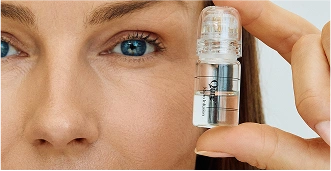
Qure's Micro-Infusion System is designed to make at-home treatment simple and consistent. It uses fixed 0.5 mm needles and a stamping motion, so there's no need to adjust depth or speed. The system also applies Qure serum during treatment, helping active ingredients reach the skin's surface through the micro-channels it creates.
Dr Pen offers electric microneedling pens with different speed levels and adjustable needle depth. They give users more control over how they perform each treatment. Dr Pen has a range of devices, some of which are designed for professional use. The M-Series and some of the A models are suitable for home use.
Qure Micro-Infusion isn't the same as traditional microneedling. It's a gentler at-home treatment designed to create controlled micro-channels with minimal to no downtime.

Qure Micro-Infusion System
Qure's Micro Infusion System uses 24K gold-plated needles that measure just 0.5mm. The depth stays fixed, which helps keep each treatment simple and consistent.
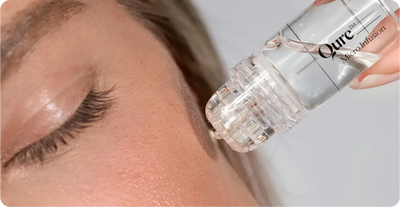
Unlike an electric microneedling pen, Qure uses a gentle stamping motion. There's no motor or speed setting to manage, which can make the process feel a little less intimidating at home.
You can also choose between two serum options, depending on your skin goals. One is designed to improve the look of dark spots and uneven tone. The other helps smooth the look of fine lines while supporting hydration.
The treatment is designed to be virtually painless, although you may feel a mild prickling sensation as you stamp. Some people also experience mild sensitivity afterward, which can last for around 24 hours.
How Does Qure Micro Infusion Work?
Getting started is easy. Attach a sterile needle head to your serum vial, then let the serum soak into the needle head for one to two minutes. Next, stamp gently across your face in sections, making two to three passes over each area.
The stamping action creates tiny micro-channels on the skin's surface. These help enhance serum absorption while giving the complexion a smoother, fresher-looking finish over time.
We recommend using the system every two weeks. In a Qure user study, 93% of participants said they noticed results the next day after their first treatment. After six treatments, 70% said their fine lines looked smoother. (Based on a user study of 30 participants aged 25–65. Individual results may vary.)

Dr Pen Microneeding Device
Dr Pen takes a more technical, adjustable approach to at-home microneedling. Its M9 is a cordless electric pen designed to give users more control over treatment depth and speed.
One of its biggest differences from Qure is needle depth. The M9 allows one-touch depth adjustment in fine 0.2 mm increments, with an extended range of up to 2.5 mm.
This adjustable setup means the depth can be changed as you move between treatment areas.
According to Dr Pen, the system also automatically resets, helping users make smoother transitions across the face and body.
The device offers six speed levels and a large LED display showing depth, speed, and battery life. This makes it easy to check your settings as you go.
Dr Pen uses replaceable, chip-verified cartridges too. The M9 set includes 36-pin, 42-pin, and Nano Round cartridge options, giving users more flexibility in how they use the device.
How Does The Dr Pen Work?
The M9 uses a motor to move the needles rapidly up and down as you guide the pen across the skin. You can adjust both speed and depth, which gives you more hands-on control over each session.
Recommended usage frequency for microneedling is once every 3 to 4 weeks.
Dr Pen recommends replacing cartridges every three to five uses, or sooner if the needles become dull, bent, or damaged.
Qure Microneedling vs Dr Pen: Head-To-Head Comparison
Here's how the two devices compare based on their design, treatment depth, and expected recovery.

|
Feature |
Qure Micro-Infusion |
Dr Pen M9 |
|
Needle Depth |
Fixed at 0.5 mm |
Adjustable in 0.2 mm increments, up to 2.5 mm |
|
Device Type |
Manual stamping device |
Electric microneedling pen |
|
Treatment Style |
Gentle, controlled micro-channels on the skin's surface |
Adjustable microneedling with greater potential treatment depth |
|
Comfort |
Virtually painless |
Sensation can vary depending on depth, speed, and skin sensitivity |
|
Immediate Skin Response |
Mild redness or sensitivity may occur |
Redness, warmth, tightness, sensitivity, and swelling may occur |
|
Downtime |
Minimal to no downtime, with mild sensitivity typically lasting around 24 hours |
Recovery can extend across several days, depending on treatment depth and skin response |
|
Skin During Recovery |
Skin may feel mildly sensitive after treatment |
Skin may become dry, rough, flaky, or peel during the first few days |
|
Recommended Frequency |
Every two weeks |
Varies by experience and skin tolerance but recommended usage frequency for microneedling is once every 3 to 4 weeks |
|
Serum Delivery |
Serum is applied as part of the stamping process |
Skincare products are applied separately |
Qure Micro-Infusion uses 0.5 mm needles to create controlled micro-channels on the skin's surface. It's designed to give you the visible benefits of needling with minimal to no downtime.
Dr Pen can reach depths of up to 2.5 mm. That extra depth gives users more flexibility, but deeper microneedling can also result in a stronger skin response and more downtime.
Dr Pen's aftercare guidance says skin may look similar to a moderate or deep sunburn immediately afterward. Redness, warmth, tightness, sensitivity, swelling, and pinpoint bruising can occur. Dryness, rough texture, flaking, and peeling may then develop over the following days.
Recovery is a key consideration when you're choosing between the two.

Microneedling vs Micro-Infusion
Microneedling and Micro-Infusion both use fine needles, but the effect on the skin can be quite different.
Traditional microneedling works by creating controlled micro-injuries in the skin. With an adjustable device like Dr Pen, needle depth can be increased depending on the treatment settings.
Dr Pen's M9 can reach up to 2.5 mm, while Qure Micro-Infusion stays at a fixed 0.5 mm. This difference helps explain why microneedling can involve a more noticeable recovery period.
According to Dr Pen, the skin barrier is temporarily compromised after treatment. During the first 24 hours, skin can remain red, swollen, dry, tight, and sensitive. Over days two and three, roughness, dryness, peeling, and flaking may occur. Recovery can continue for four to seven days before the skin returns to its usual routine.
Micro-Infusion is gentler. Qure's fixed 0.5 mm needles create micro-channels on the skin's surface while helping apply serum during treatment. Most users can expect minimal to no downtime, although mild sensitivity can last for around 24 hours.
So, while both involve needles, they're different experiences.
Microneedling gives you greater control over depth, but that can come with a stronger skin response and more aftercare.
Micro-Infusion focuses on a gentler, more predictable at-home treatment. It's more suitable for beginners who are just starting to explore microneedling treatments and are looking for something simple and easy to add to their skincare routine.
If you're looking to compare micro-infusion devices, see our Qure vs Glov comparison.
Conclusion
Qure Micro-Infusion and Dr Pen both bring needling treatments into the home, but they offer different experiences.
Dr Pen gives you more control over depth and speed, with settings reaching up to 2.5 mm. That flexibility can also mean a stronger skin response, more involved aftercare, and several days of recovery depending on the treatment.
Qure takes a gentler approach. The Micro-Infusion System uses a fixed 0.5 mm depth and a simple stamping motion, helping create controlled micro-channels while applying serum at the same time.
It's virtually painless, with minimal to no downtime and a straightforward routine you can repeat every two weeks.
If you want visible skin benefits without managing deeper settings or a longer recovery period, explore the Qure Micro-Infusion System and see how it could fit into your skincare routine.
Most Popular Posts
-
 #Skin
#Skin
What You Eat Can Reduce Premature Aging by...
-
#Skincare
Beauty Sleep Is Real!
-
#LED Light Therapy
Hack your skincare to match your menstrual cycle
-
#Skin
Ice Bath Facial: the affordably cool hack that...
-
#Skincare
5 Ways To Prevent Premature Ageing
-
#Skincare
Glow Up for the Holidays: Radiant Skin Tips...
-
#LED Light Therapy
Shining Light On Sun-Damaged Skin
-
#LED Light Therapy
How LED Therapy Can Transform Your Skin
-
#Skin
How Cortisol Affects the Skin: The Stress-Skin Connection...
-
#Skin
The Hidden Toll of Smoking on Your Skin:...


